


NEW JERSEY WHALE RESEARCH • CELEBRATING A MILESTONE
Celebrating Dr. Danielle Brown and Her First Whale Tagging Milestone with Rutgers
A proud moment for a dedicated whale researcher—and for everyone who has spent nine years learning from her at Jersey Shore Whale Watch.
By Bill McKim, Jersey Shore Whale Watch • October 29, 2026
Some accomplishments mean even more when you remember the conversations that came before them.
I remember talking with Danielle Brown about her plans for Rutgers and the years of study ahead. Her enthusiasm for whales was already unmistakable. She wanted to understand these animals, contribute to research, and share what she learned.
Today, she is Dr. Danielle Brown, our lead naturalist at Jersey Shore Whale Watch. She has earned her doctorate, continued her work studying whales, and now reached another remarkable milestone: personally tagging her first whale as part of the Rutgers whale research team.
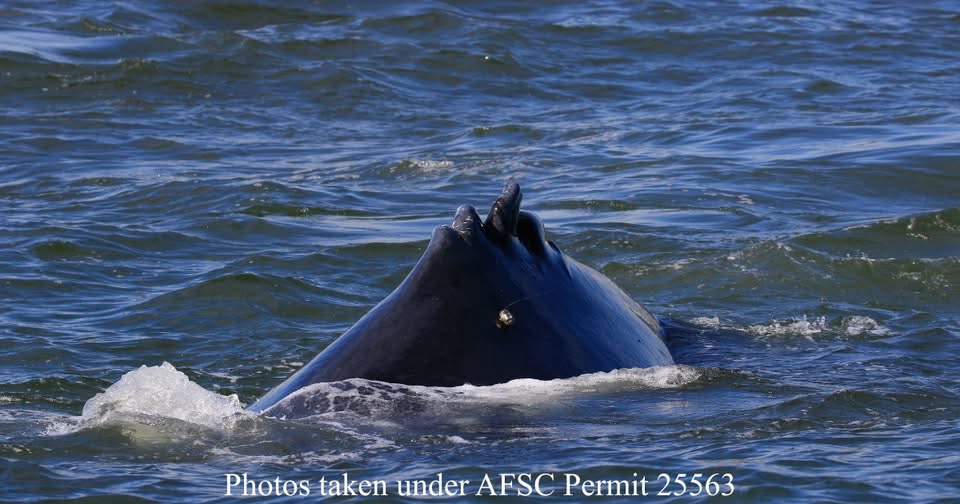
Special thanks to Mackenzie Peacock for photos today!
Danielle, we are incredibly proud of you.
A Special Day for the Rutgers Whale Tagging Team
In a recent update, RU Tracking Whales reported that the Rutgers whale tagging team observed seven individual humpback whales between Barnegat Light and Lavallette, including a mother and calf. During that research outing, the team successfully deployed satellite tags on two more whales.
For Danielle, the day included a personal first: deploying a whale tag herself. Her excitement was clear in the announcement she shared, and she was quick to recognize the people who helped make it possible.
Danielle credited the Rutgers whale tagging team and its research partners. It was a shared accomplishment built on preparation, teamwork, and a dedication to understanding whales.
For those of us at Jersey Shore Whale Watch, it is especially meaningful to see our lead naturalist reach this milestone. The scientist contributing to this research is also the person who has spent nine years sharing her knowledge and enthusiasm with our passengers.
What Is the Rutgers Whale Tagging Project Studying?
The Rutgers project studies the movements and habitat use of humpback whales and fin whales, including where their activities overlap with human activities in the waters off New Jersey.
A
A Chance Encounter—and a Memorable School Trip
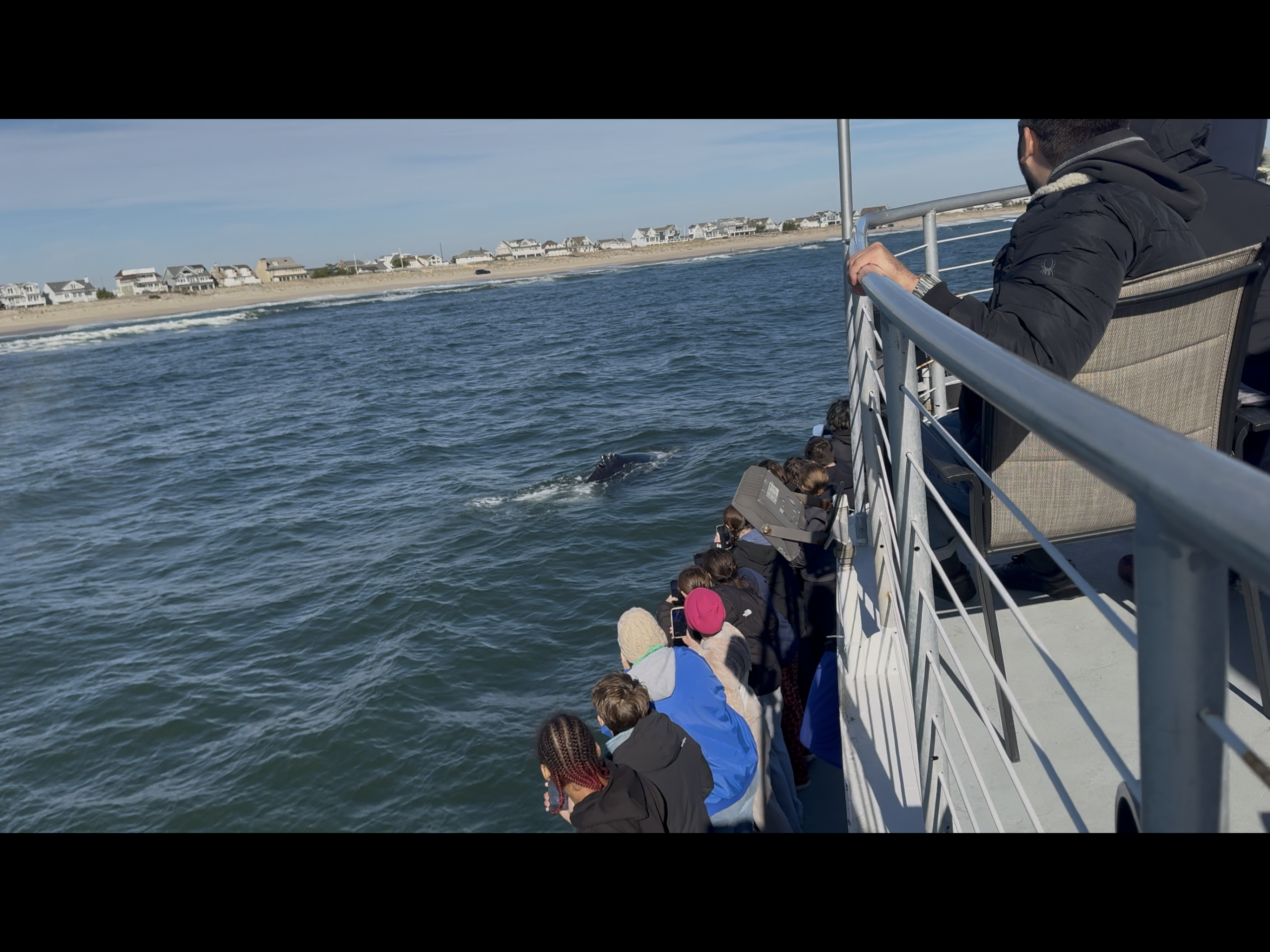
By chance, Jersey Shore Whale Watch was observing this humpback aboard
Jersey Girl when we realized we could help the Rutgers
research team locate it. Recognizing the whale by its distinctive dorsal
fin and healed vessel-strike scars, we called the researchers on the
radio and shared our location.
Among our passengers were students from
Manchester Township Middle School, who had the
opportunity to see this whale shortly before it was tagged. During
our encounter, the whale approached Jersey Girl on its own while
our engines were in neutral. The photograph below captures that
memorable moment.
We explained to the students and our other passengers that the Rutgers
team was preparing to deploy a research tag to help study the whale’s
movements. We also explained why we needed to leave the area for
safety and operational reasons, giving the researchers room to
carry out their work. Jersey Girl departed before the tagging
operation began.
For the students, it was an exciting connection between seeing a whale
in the wild and learning how scientists study these animals. Alongside
our other guests and returning passengers, they enjoyed a very special
trip—one that brought whale watching, education, and an unfolding
research effort together in a way none of us had planned.
Satellite tags help researchers follow whale movements beyond a single encounter. The information can help scientists understand where whales spend time, how they move between areas, and where they may encounter risks.
The research is funded through the New Jersey Department of Environmental Protection’s Research and Monitoring Initiative. NJDEP’s project announcement describes the study’s focus on whale movements in and around offshore wind lease areas and potential overlap with major shipping lanes.
Anyone who has watched a whale disappear beneath the surface has probably wondered where it will go next. This research helps scientists investigate that question—and why the answer matters.
A Right Whale Encounter Shows Why Research Matters
In a separate outing that same week, the Rutgers team documented a critically endangered North Atlantic right whale near Barnegat Inlet. Danielle identified the whale as Calvin.
She described the encounter as her first right whale sighting in six years, following an earlier sighting of a whale named Platypus during a Jersey Shore Whale Watch trip.
The excitement also came with concern. In her account, Danielle reported a near collision involving a commercial vessel whose operator appeared unaware of the whale. She described efforts to alert others, including asking the Coast Guard to issue an alert to mariners.
That encounter is a reminder that studying whales involves more than documenting extraordinary moments. Understanding where whales travel and how they share the water with people can help inform efforts to protect them.
Nine Years with Jersey Shore Whale Watch
Danielle’s academic journey includes a master’s degree from George Mason University and a Ph.D. from Rutgers University, which Rutgers lists among its 2025 doctoral graduates. Her dissertation examined humpback whale ecology along the East Coast using historical and biological archives.
We have had the privilege of watching that journey unfold while Danielle has helped our passengers better understand the whales off New Jersey.
Aboard Jersey Girl, our whale-watching boat departing from Belmar, New Jersey, Danielle brings years of field experience and scientific study to the trips she leads.
When passengers hear her explain whale behavior, recognize an individual animal, or describe the questions researchers are investigating, they are learning from someone actively involved in the field.
That is something we value deeply at Jersey Shore Whale Watch. Our naturalists help turn a sighting into an opportunity to understand the animal, its habitat, and the importance of observing wildlife responsibly.
Bringing Scientific Experience Aboard Jersey Girl
Danielle’s research experience adds depth to the education she provides on our tours. Her understanding of whale behavior and the New York–New Jersey marine environment helps passengers appreciate much more than what appears above the surface.
For a student seeing a humpback for the first time, a photographer returning for another trip, or a family discovering that whales feed off the Jersey Shore, that knowledge can make a lasting impression.
We are proud that our passengers have opportunities to learn from an accomplished researcher whose work extends beyond the tours she leads. Her recent tagging milestone is a wonderful example of that commitment.
With pride and appreciation,
Bill McKim and the Jersey Shore Whale Watch team
Aboard Jersey Girl • Belmar, New Jersey