


Best Whale Watching on the East Coast: Why New Jersey Belongs at the Top
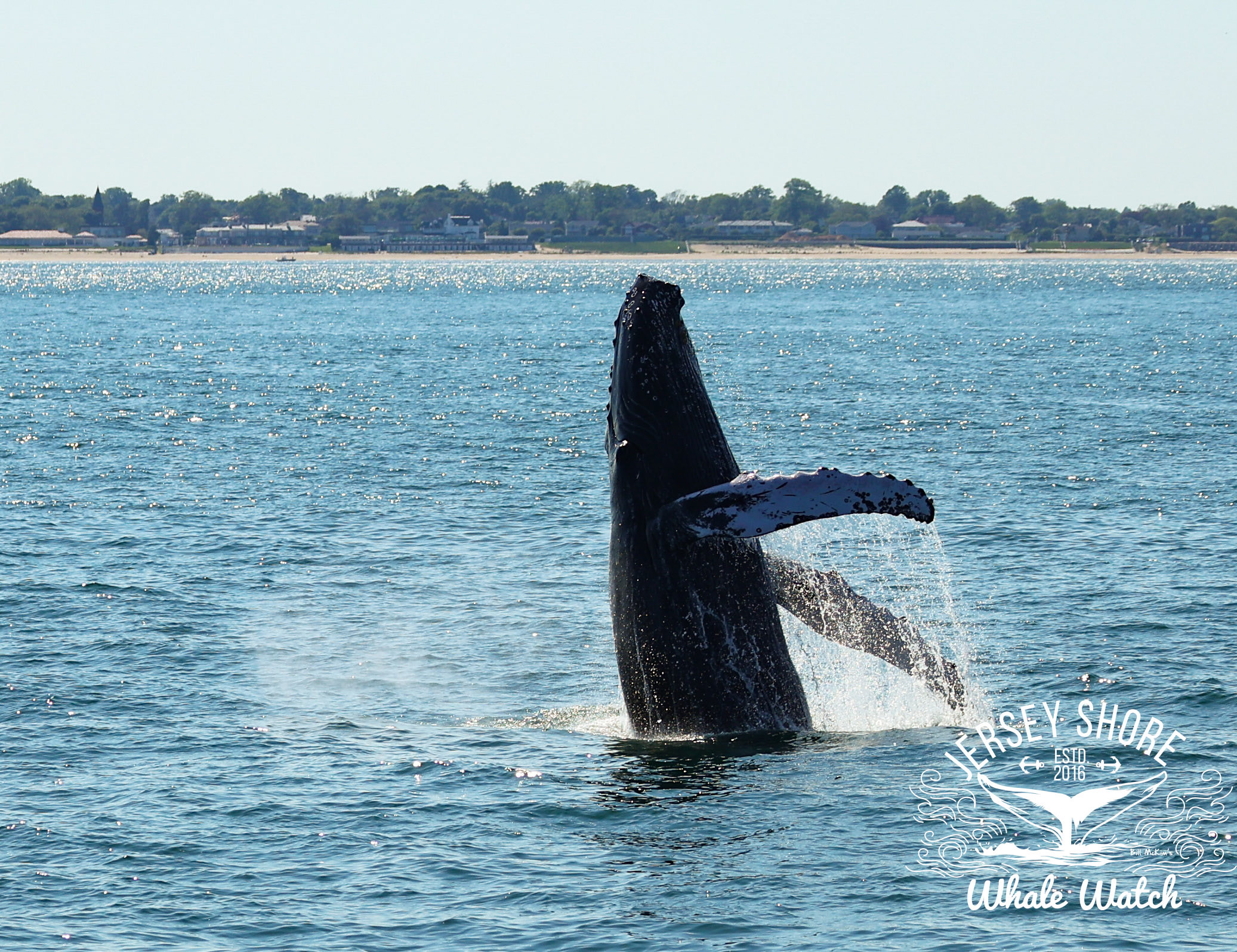
When people think about whale watching on the East Coast, they often immediately picture Cape Cod or Maine.
Those are excellent whale-watching destinations, but they are no longer the only places that deserve serious consideration.
Over the past decade, the waters off New Jersey and the New York Bight have become one of the most exciting places
on the East Coast to see humpback whales. For travelers looking at the complete experience — whale activity,
length of season, accessibility, frequency of trips, vessel capability, professional naturalists and overall convenience —
New Jersey now belongs at or near the top of the list.
For many travelers, we believe Jersey Shore Whale Watch in Belmar, New Jersey, offers the best overall
whale-watching experience on the East Coast.
That is a strong statement, so rather than simply making the claim, here is how the leading East Coast
whale-watching destinations compare.
Our Ranking of the Best East Coast Whale-Watching Destinations
1. Belmar, New Jersey — Jersey Shore Whale Watch
Best overall combination of season, accessibility, frequent departures, professional naturalists and whale-searching capability.
Jersey Shore Whale Watch operates from Belmar Marina aboard the Jersey Girl, a large passenger vessel
designed for comfortable coastal excursions and serious whale searching.
One of New Jersey’s biggest advantages is the length of the whale-watching season.
Our season begins in April and continues through December, providing opportunities to see whales
across spring, summer, fall and into early winter.
During the height of the season, Jersey Shore Whale Watch operates seven days a week,
with multiple excursions offered on many days.
That matters.
Whales do not appear according to a weekend schedule. Their movements are driven largely by baitfish,
water conditions and feeding opportunities. Being on the water consistently gives our captains,
naturalists and crew continually updated knowledge of where whales are being seen.
A Boat Built to Go Where the Whales Are
Another major advantage is the Jersey Girl herself.
In 2026, Jersey Girl underwent a major repower with three new Scania marine diesel engines producing
approximately 1,700 combined horsepower.
The purpose is not simply to make the boat fast.
Whales follow bait, not boats.
One day the whales may be relatively close to Belmar. Another day the most productive activity may be many miles
north toward Sandy Hook or elsewhere along the New Jersey coast.
Jersey Girl’s speed and range allow us to cover considerably more water when necessary and search for the best
wildlife activity rather than being restricted to a small area surrounding the inlet.
Our goal every day is simple:
Go where the whales are.
Marine Science and Education Aboard Jersey Girl
A great whale-watching trip is about more than simply locating a whale.
Understanding what the animal is doing, why it is feeding in a particular area, how researchers identify individual
humpbacks and how these animals use the New York Bight can completely change the experience.
Jersey Shore Whale Watch is fortunate to employ Dr. Danielle Browne, our longtime lead naturalist
and marine mammal researcher.
Dr. Browne has been with Jersey Shore Whale Watch for nine years and is also involved in leading
whale research with Gotham Whale in New York City, an organization that has helped document and study
the remarkable return of humpback whales to the waters surrounding New York and New Jersey.
Her work includes identifying and tracking individual humpback whales, documenting their movements and feeding behavior,
photographing flukes for identification and contributing to the long-term study of whales using the New York Bight.
When Dr. Browne is aboard Jersey Girl, passengers are not simply hearing a memorized whale-watching narration.
They are learning from someone who has spent years studying many of the same whales we encounter during our trips.
A sighting can become much more than simply, “There’s a whale.”
Passengers may learn which individual whale they are seeing, whether that animal has been documented previously,
what feeding technique it is using, what baitfish may be attracting it to the area and how researchers follow these
animals from year to year.
For Jersey Shore Whale Watch, whale watching is not simply sightseeing.
It is wildlife observation, education and marine science happening in real time.
More Than 2,700 Google Reviews
A company’s own description of its trips is one thing. Thousands of customers describing their experiences is
something entirely different.
Jersey Shore Whale Watch has a 4.8 out of 5 rating on Google from more than 2,700 reviews.
That volume of independent customer feedback gives travelers an unusually large sample of real passenger experiences
before deciding whether to book.
Guests frequently comment on the whales and dolphins they encountered, the naturalists and crew,
the Jersey Girl, the educational experience and the excitement of seeing marine wildlife along the Jersey Shore.
We Want You to Enjoy the Ocean — Not Endure It
Another important factor when choosing any whale-watching destination is something that doesn’t always appear in travel guides:
sea conditions.
A commercial passenger vessel may technically be capable of operating in conditions that the average passenger
would find extremely uncomfortable.
Our philosophy is different.
Jersey Shore Whale Watch takes a conservative approach to ocean conditions because a whale-watching trip should
be something guests enjoy — not something they simply endure.
If conditions are expected to make the ocean unnecessarily rough or the experience unpleasant,
we would rather make the conservative decision than put passengers through hours of miserable seas.
For first-time boaters, families with children and people concerned about motion sickness, that matters.
Convenient to New York City and Philadelphia
Belmar is uniquely positioned between two enormous metropolitan areas.
Visitors can experience legitimate Atlantic Ocean whale watching without making a vacation-length journey
to northern New England.
For millions of people in New Jersey, New York and eastern Pennsylvania, whale watching can be a
day trip, not an expedition.
That combination is difficult to match:
April through December. Frequent departures. Humpback whales. Dolphins. Professional naturalists.
A newly repowered high-speed vessel. More than 2,700 Google reviews. And easy access from two of America’s
largest metropolitan areas.
That is why we rank Belmar and Jersey Shore Whale Watch #1 overall.
2. Cape Cod, Massachusetts
Best-known traditional East Coast whale-watching destination.
Cape Cod deserves its reputation.
For decades, Massachusetts has been one of America’s best-known whale-watching destinations.
The waters around Stellwagen Bank can produce outstanding encounters with humpback whales and other large whale species.
If someone told us they were planning a summer vacation specifically around whale watching in New England,
Cape Cod would be very high on our list.
Cape Cod also benefits from decades of tourism infrastructure built around whale watching.
Its primary disadvantage compared with New Jersey is its shorter practical season and the amount of travel required
for visitors coming from the New York and Philadelphia regions.
For many Mid-Atlantic travelers, Cape Cod generally means a much longer drive, overnight accommodations
and a substantially larger travel commitment.
New Jersey offers many travelers the opportunity to see humpback whales without turning the experience
into a multi-day trip.
Our verdict: One of America’s legendary whale-watching destinations and an excellent choice,
particularly as part of a New England vacation.
3. Maine
Best combination of whale watching and a classic New England vacation.
Maine can offer spectacular whale watching and some of the most beautiful coastal scenery anywhere in America.
It is an outstanding destination for travelers who want to combine whale watching with a larger Maine vacation.
The tradeoff is distance.
For someone traveling from New Jersey or the New York City region, Maine can involve eight hours or more of
travel depending on the destination, usually making an overnight stay necessary.
That doesn’t make Maine a lesser whale-watching destination. It simply makes it a very different decision
from driving to Belmar for the day.
Maine excursions can also travel farther offshore, depending upon where whales are located.
Anyone booking a whale watch anywhere in northern New England should understand that these can be genuine
offshore Atlantic Ocean excursions.
If you have never spent several hours aboard an ocean-going boat, pay close attention to the marine forecast
and the operator’s approach to sea conditions.
Our verdict: An outstanding whale-watching destination, especially when incorporated into
a Maine vacation, but considerably less convenient for the New York/New Jersey market.
4. New York City and Long Island
Best option for travelers who want to remain inside the New York market.
The return of whales to waters around New York has been one of the great marine wildlife stories of recent years.
Humpback whales now feed throughout the broader New York Bight, including waters off both New York and New Jersey.
That means whale watching is no longer something New Yorkers necessarily have to travel to New England to experience.
New York-area departures can be very convenient for visitors already staying in the city or on Long Island.
Belmar, however, offers another compelling option for New York travelers.
Jersey Girl can search a substantial section of the New Jersey coastline depending upon where bait and whales
are concentrated on a particular day.
Our verdict: A rapidly growing and legitimate whale-watching region, with Belmar providing
an excellent alternative for New York-area travelers.
5. Cape May, New Jersey
Best for combining dolphins, coastal wildlife and a Cape May vacation.
Cape May has a long and respected history of marine wildlife excursions.
It is a fantastic tourism destination and an excellent place to enjoy the water.
Dolphins are a particularly important part of the Cape May marine-wildlife experience and are generally encountered
more consistently there than whales.
Whales certainly can be encountered in southern New Jersey waters as well, but travelers whose primary goal is
specifically humpback whale watching should compare recent sightings and trip reports before deciding
where along the Jersey coast to depart.
One major advantage of Cape May is the destination itself. Restaurants, beaches, Victorian architecture,
birding and marine excursions make it easy to build an entire vacation around the area.
Farther north, however, the waters off Monmouth County, Sandy Hook and the northern Jersey Shore have become
extraordinarily productive humpback whale habitat.
Our verdict: A fantastic marine-wildlife destination, particularly for dolphins and travelers
already vacationing in Cape May.
6. Virginia Beach, Virginia
Best winter whale-watching option.
Virginia Beach can provide excellent winter whale watching.
Humpback whales migrate through the waters off Virginia, creating opportunities for dramatic winter encounters.
The primary limitation is the relatively short whale-watching season.
Virginia Beach whale watching is concentrated heavily around the winter migration period,
while New Jersey’s season extends across much more of the calendar.
For travelers living in the New York/New Jersey region, Virginia Beach also represents a substantial drive
compared with Belmar.
But if you’re already planning a winter visit to Virginia Beach, whale watching deserves consideration.
Our verdict: One of the East Coast’s better winter whale-watching opportunities,
but a considerably shorter and more seasonal experience.
Why Has Whale Watching Become So Good in New Jersey?
The simple answer is food.
Humpback whales follow concentrations of baitfish.
The waters off New Jersey support large schools of menhaden and other forage fish.
When those baitfish concentrate near the coast, humpback whales frequently follow them.
That can produce extraordinary behavior.
- Lunge feeding
- Tail slapping
- Pectoral fin slapping
- Traveling
- Surface feeding
- Breaching
- Feeding alongside dolphins
- Moving through enormous schools of baitfish
No responsible whale-watch operator can guarantee what a wild animal will do on a particular day.
That’s part of what makes whale watching special.
Every trip is different.
When Is the Best Time to Go Whale Watching in New Jersey?
One of New Jersey’s greatest advantages is that there isn’t just one short whale-watching window.
Jersey Shore Whale Watch operates from April through December.
Whale distribution changes throughout the year as water temperatures, bait concentrations and migration patterns change.
Spring can bring whales back into the region as marine life becomes increasingly active.
Summer can produce tremendous coastal feeding activity.
Fall can be exceptional as large schools of baitfish gather along the coastline.
Even late-season trips can produce memorable sightings as whales continue moving through the region.
Rather than asking only, “What month is best?”, we encourage visitors to look at our current
trip reports and recent sightings.
Whales are wild animals, and current feeding activity can sometimes tell you much more than the calendar alone.
Whale Watching From NYC Without Going to New England
For travelers visiting New York City, this may be the biggest surprise of all:
You don’t have to travel to Cape Cod to see humpback whales.
Belmar, New Jersey, provides access to the productive waters of the New York Bight and Jersey Shore
while remaining within practical day-trip distance of the New York metropolitan area.
That creates an opportunity to spend the morning traveling to the Jersey Shore, spend the afternoon
whale watching aboard Jersey Girl and return to the New York area afterward.
For families spending several days in New York, it can provide an entirely different experience from museums,
Broadway and traditional sightseeing.
One day you’re looking at skyscrapers.
The next, you’re watching a humpback whale feed in the Atlantic Ocean.
How to Choose the Right East Coast Whale-Watching Trip
Wherever you decide to go, don’t choose a whale watch based entirely on price.
How Long Is the Operator’s Season?
An operation that spends months on the water develops extensive local knowledge about changing whale locations
and seasonal patterns.
How Often Does the Boat Operate?
Frequent trips provide captains, crews and naturalists with continually updated information about recent wildlife activity.
How Far Can the Vessel Search?
The best wildlife activity isn’t always directly outside the inlet.
Are Experienced Naturalists Aboard?
Seeing a whale is incredible. Understanding what the animal is doing makes the experience much richer.
Experienced naturalists can transform a sighting into an educational wildlife experience.
What Do Previous Guests Say?
Read recent reviews — not simply the overall star rating. Look for comments about the crew,
comfort, communication, naturalists, wildlife sightings and the total passenger experience.
How Does the Company Approach Rough Weather?
Ask whether you want an operator willing to sail whenever technically possible or one that also considers
passenger comfort and the quality of the experience.
Our Choice for Best Whale Watching on the East Coast
Every destination on this list has something worthwhile to offer.
Cape Cod has an extraordinary whale-watching tradition.
Maine provides spectacular scenery.
Virginia Beach offers winter whales.
Cape May combines marine wildlife with one of New Jersey’s most popular coastal destinations.
New York provides convenient access from America’s largest city.
But when we evaluate the entire experience —
length of season, frequency of operation, accessibility, whale activity, professional naturalists,
vessel range, customer reviews and overall convenience —
we believe Belmar, New Jersey, deserves the #1 position.
Aboard Jersey Girl, Jersey Shore Whale Watch has built an operation specifically around finding whales
along this constantly changing coastline.
We operate across one of the longest whale-watching seasons on the East Coast —
April through December.
We operate seven days a week during our busiest season.
We employ experienced professional naturalists, including longtime lead naturalist and marine mammal researcher
Dr. Danielle Browne.
We have a newly repowered high-speed vessel capable of covering significant distances when the whales move.
We take a conservative approach to ocean conditions because we want guests to enjoy their trip, not endure it.
And thousands of passengers have shared their experiences publicly, resulting in a
4.8-star Google rating from more than 2,700 reviews.
If you’ve always thought serious East Coast whale watching meant traveling all the way to New England,
it may be time to take another look at the Jersey Shore.
Come Whale Watching From Belmar, New Jersey
Jersey Shore Whale Watch sails aboard Jersey Girl from Belmar Marina,
with whale-watching trips operating from spring through early winter.
See our current schedule, recent whale sightings and available trips — and come discover why New Jersey
has become one of the most exciting whale-watching destinations on the East Coast.
Jersey Shore Whale Watch — Belmar, New Jersey
Whale watching from April through December.
Come see why thousands of guests have chosen Jersey Girl to experience whales along the Jersey Shore.